
Paleovista · Art by Victor O. Leshyk
More than 100 million years ago, a young dinosaur staggered across the shallow, hypersaline flats of an inland sea in what is now the Romualdo Formation in Brazil, under a blazing tropical sun. When the animal finally collapsed into the slimy microbial mats of the beach, the special biochemistry of the bacterial layers that cloaked the carcass preserved its red blood cells as tiny time capsules, with dinosaur heme inside.
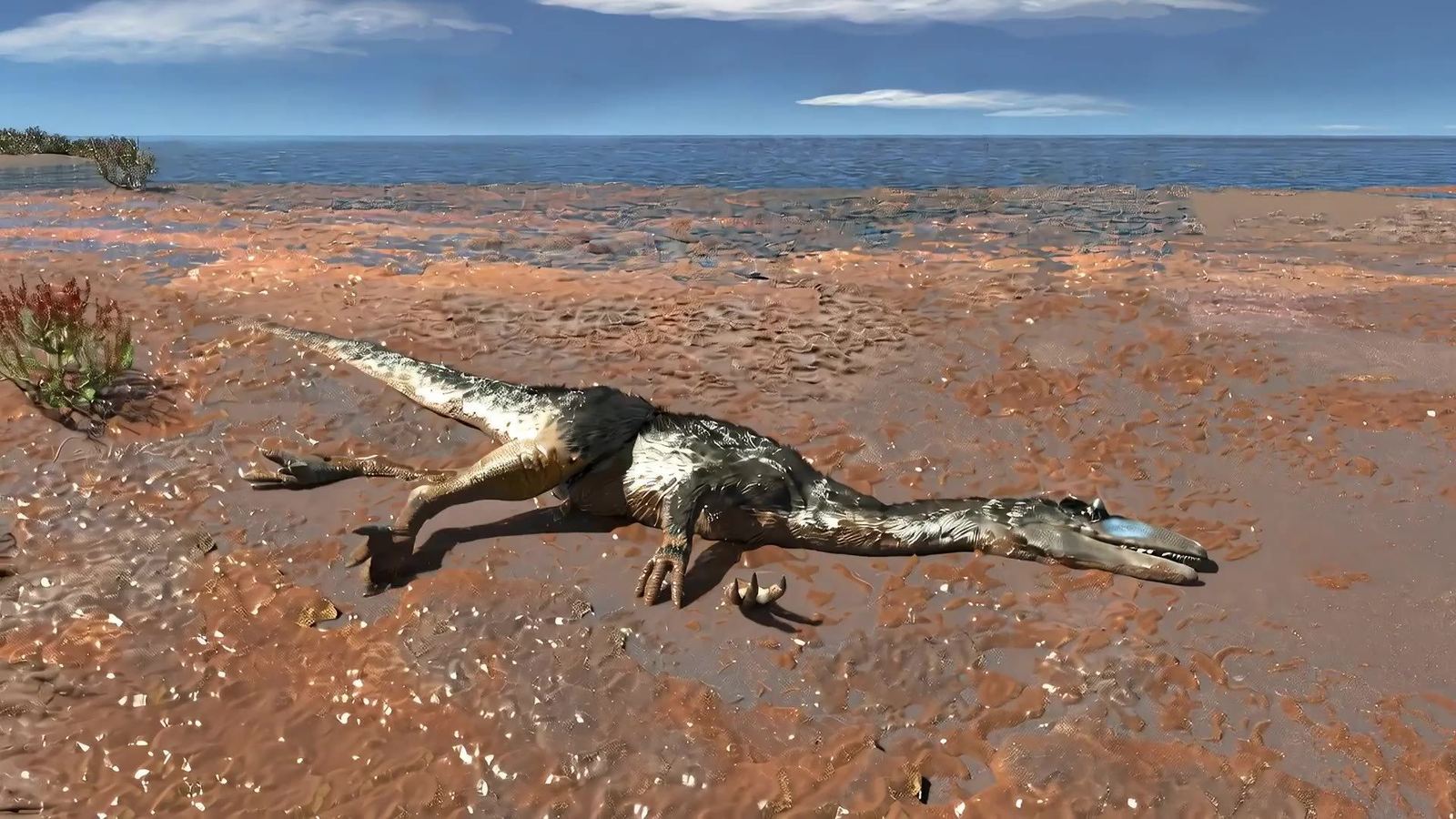
Animation still by Victor O. Leshyk
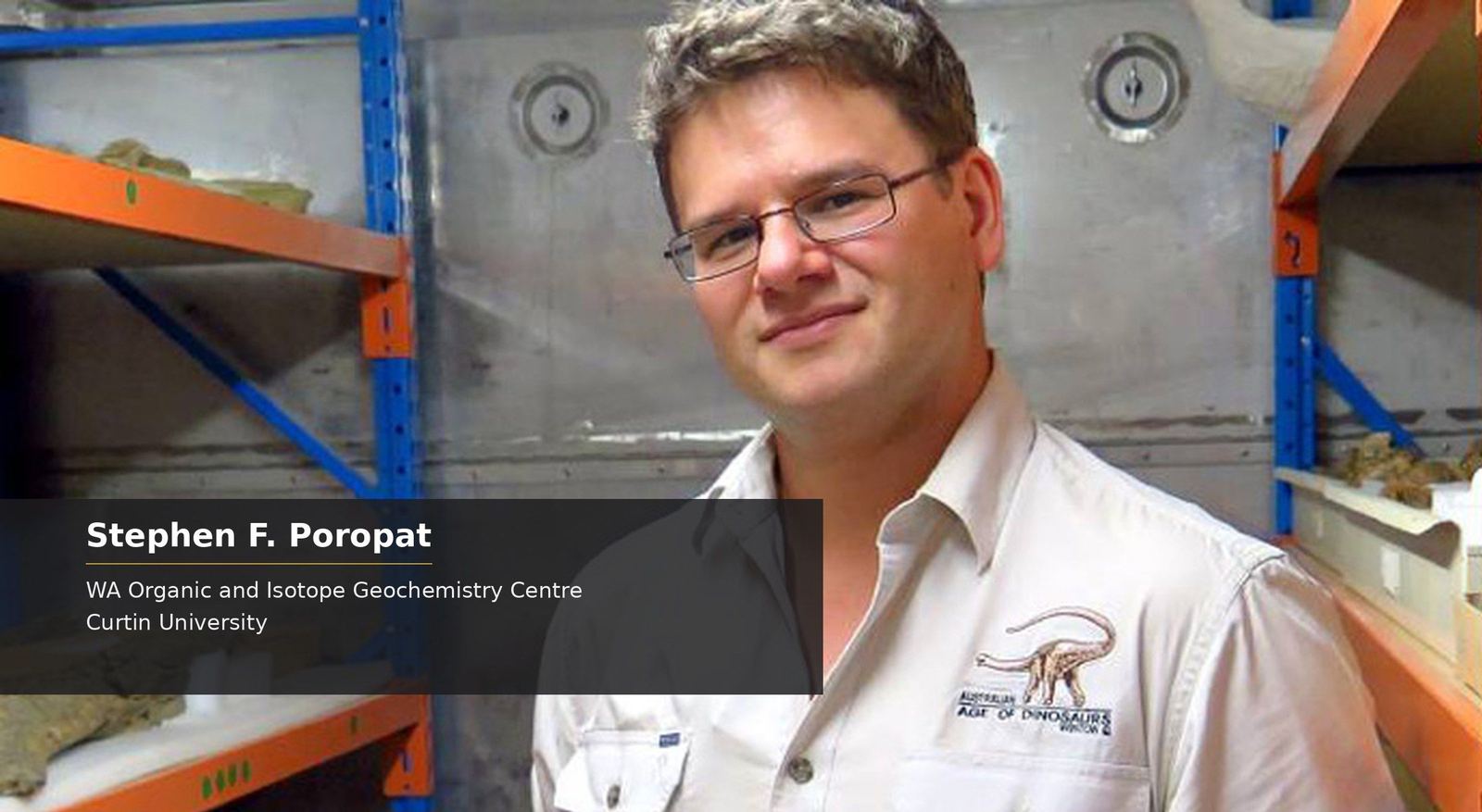
115 million years later, a tiny fragment of its leg bone was cataloged as Aratasaurus, one of the earliest theropod dinosaurs, and found itself in a small unburned section of the tragically burned Museu Nacional of Brazil, while countless other specimens were buried in ashy debris. Eventually the specimen passed under the investigating eyes of Dr. Kliti Grice and Stephen Poropat, who would discover that not only was the fossil miraculously preserved from the museum fire, but it was exceptionally preserved all the way from the Cretaceous. Intact red blood cells, normally destroyed during ordinary fossilization, were visible, parked like tiny stopped cars in the blood vessels throughout the specimen. Analysis proved their identity when true dinosaurian heme, which had survived millions of years frozen in the minerals precipitated in the fossil, was recovered. This exceptional fossil now serves as a giant message: even the humblest-seeming fossil scraps might capture unexpected detail. The race is now on to identify more such fossils which may have fallen into "exceptional" microenvironment where researchers might hope to uncover more molecules of life...perhaps the holy grail of dinosaur DNA.
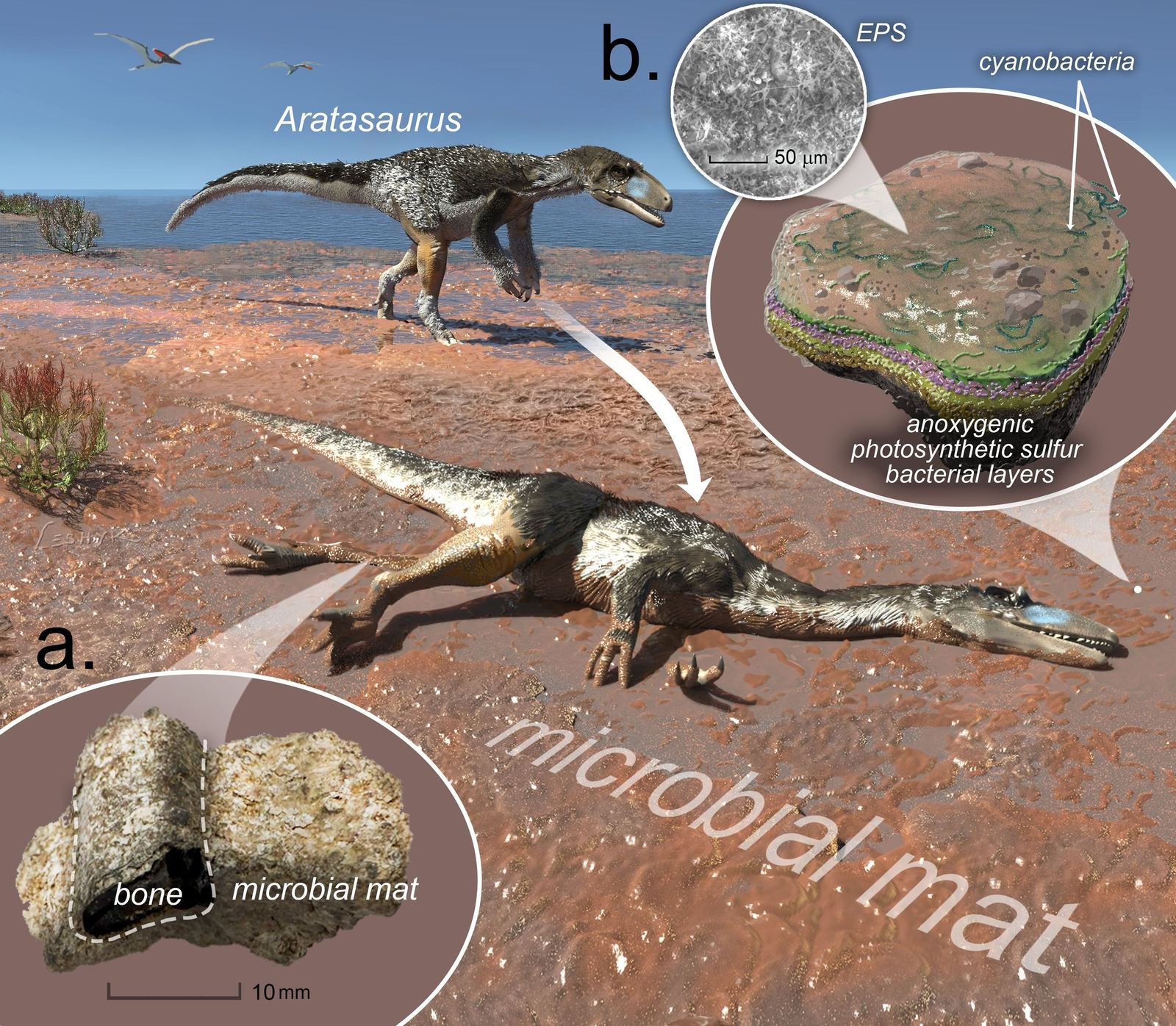
Art by Victor O. Leshyk
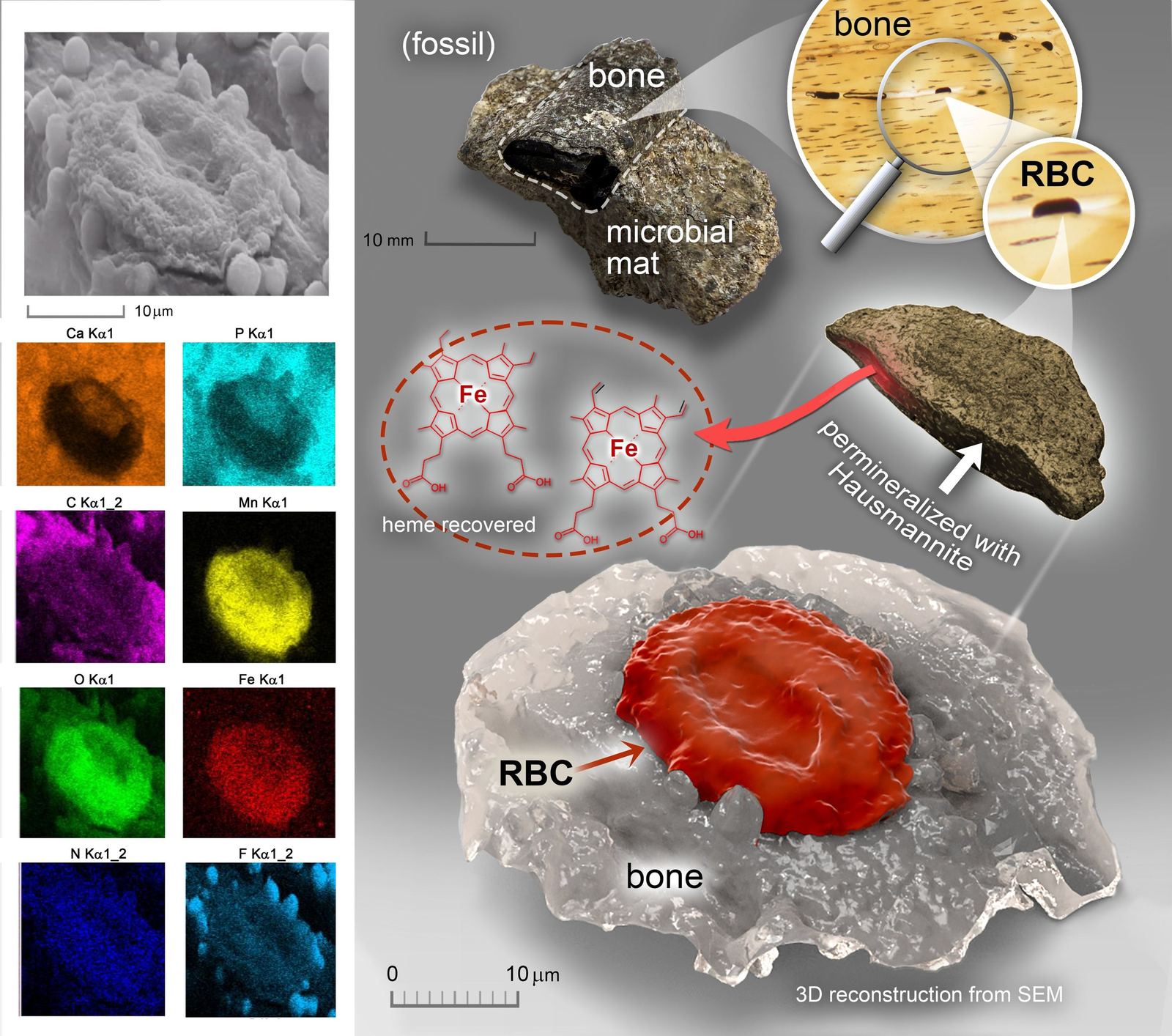
Composition by Victor O. Leshyk
Detection of endogenous biomolecules in vertebrate fossils remains controversial because labile compounds degrade quickly and are highly susceptible to contamination. Here, we present the first data on the preservation of heme-derived tetrapyrroles, and vascular canal-constrained ellipsoidal microstructures, inferred to be red blood cells, in limb bones of Aratasaurus museunacionali, a 115-million-year-old theropod dinosaur. High-performance liquid chromatography–mass spectrometry identified parent and diagenetically altered heme B as the principal tetrapyrroles of bone extract, contrasting the chlorophyll and bacteriochlorophyll porphyrin signatures of the surrounding matrix supporting an endogenous origin. Separate spatially resolved analyses by Raman spectroscopy and transmission electron microscopy confirmed the ellipsoid microstructure localisation of i) porphyrin signals of heme; and ii) key elements of heme (Fe, N, C) and mineral stabilizing hausmannite (Mn₃O₄), respectively. These results demonstrate blood-derived biomolecules in mineralized red blood cells of a dinosaur.
This research is significant because it provides strong evidence that original biological molecules can survive in dinosaur fossils, challenging the long-held assumption that such compounds degrade over millions of years. Crucially, it reports, for the first time, heme signatures localized within structures interpreted as fossilized red blood cells, strengthening the link between chemistry and preserved microanatomy. By identifying heme-derived molecules—key components of blood—and confirming their spatial association, the study reduces the likelihood of contamination. For scientists outside this field, it expands the potential of fossils beyond morphology, opening new ways to investigate ancient physiology, oxygen transport, and evolutionary biology through molecular evidence once thought unrecoverable.
“This is a first in the world, and it’s unequivocal evidence of haem present in the red blood cells of a theropod dinosaur that is 115 million years old. It’s a pretty exciting discovery. I didn’t think in my career that I would ever have found this kind of evidence.”
— Professor Kliti Grice, Curtin University
Heme signatures in mineralized red blood cells within vascular canals of a 115-million-year-old dinosaur bone
¹Western Australian Organic and Isotope Geochemistry Centre, Curtin University, Australia.
²Biogeochemistry Research Center, Japan Agency for Marine-Earth Science and Technology, Yokosuka, Japan.
³Department of Earth and Planetary Sciences, Johns Hopkins University, USA.
⁴John de Laeter Centre, Curtin University, Australia.
⁵Department of Biological Sciences, Regional University of Cariri, Brazil.
⁶Christian-Albrechts-University; Institute of Geosciences, Kiel, Germany.
⁷Department of Marine Sciences, University of Connecticut, USA.
⁸Laboratory of Systematics and Taphonomy of Fossil Vertebrates, Department of Geology and Palaeontology, Museu Nacional (MN) / Federal University of Rio de Janeiro (UFRJ), 20940-040, Brazil.
⁹Microanalysis Australia; Australia.
¹⁰Azolla Biodesign, Arizona, USA.
In this virtual diorama, Paleovista's artist Victor O. Leshyk's reconstructions bring the last moments and the intimate details of this long lost dino to life.
Enter the dioramaExplore the Triassic dioramaWA-OIGC at Curtin UniversityReach out here via email to start a discussion about your new project: